







Pros and Cons of Owning a Franchise in the UK
A balanced guide to franchise benefits, risks, costs, and what to weigh up before you commit
What Is a Franchise?
A franchise is a set-up where someone runs their own outlet but trades under a known brand, using its systems and support. In return, they pay fees and follow rules on products, pricing, and how the business is run. For many new owners, this mix of guidance and control feels safer than building an idea from scratch.
"Franchising is about being in business for yourself, but not by yourself."
A phrase often used by franchise coaches to describe the balance between independence and supportThat does not mean franchising is an easy route. It is still a serious financial and personal commitment that affects daily life, family time, and long-term plans. To see whether it fits personal goals, it helps to look calmly at both franchise benefits and franchise risks.
The Advantages of Owning a Franchise

At first glance, franchising often looks like a safer path into business ownership. Instead of guessing what might work, a new owner follows a method that has already been tried in other towns and cities. This can be reassuring for first-time business owners or career changers who want guidance as well as independence.
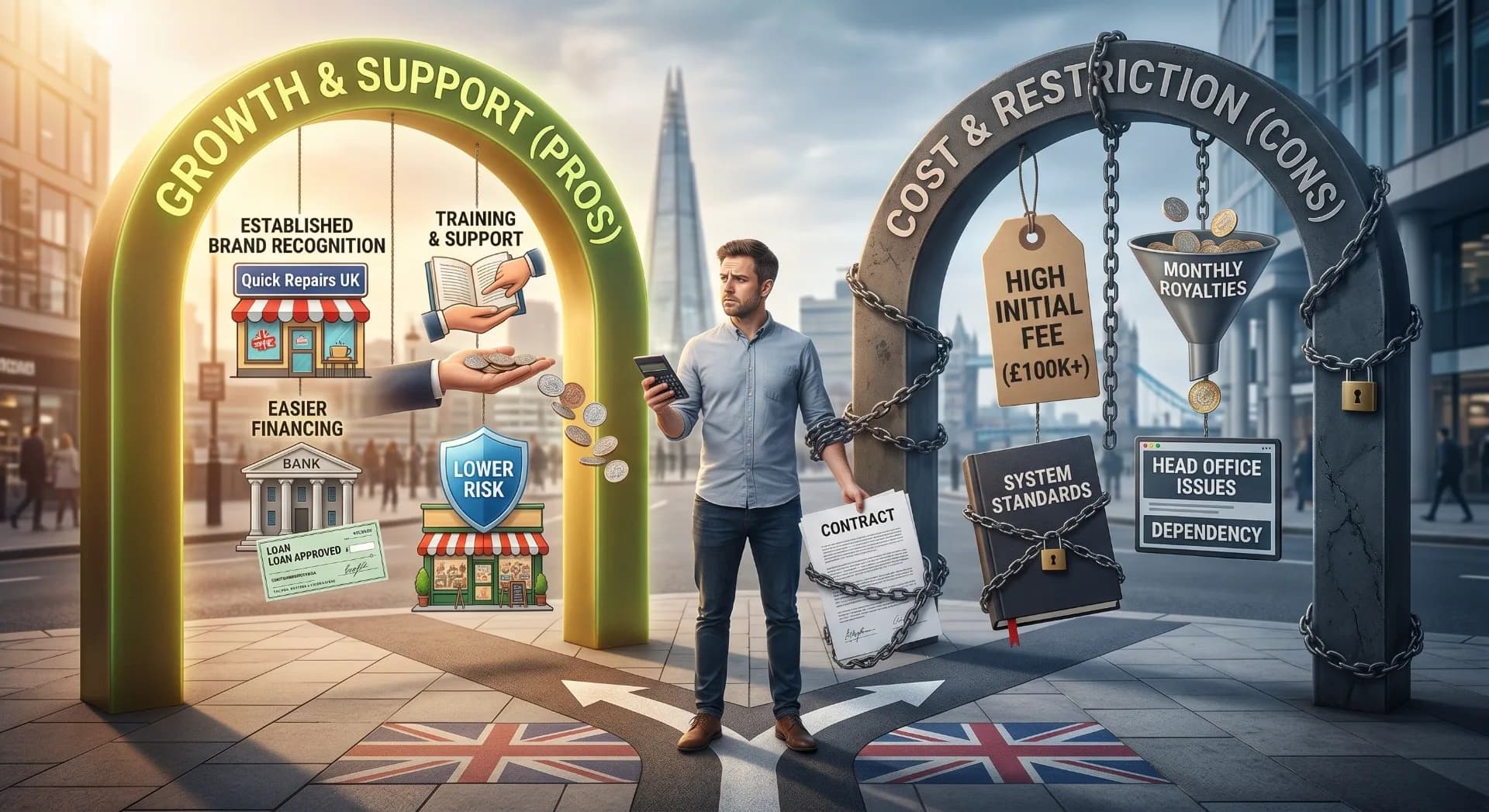
One of the biggest franchise advantages is brand recognition. An independent café or gym needs time and money to win trust. A well-known franchise brand often brings customers through the door from day one. Because of this track record, banks may also look more kindly on franchise funding requests than on brand-new concepts.
Instant name recognition gives quicker sales and stronger early cash flow. Customers already know what to expect from adverts or other branches they've used.
The franchisor has already worked through suppliers, pricing, and systems, so you avoid many common early mistakes. Lenders see this as lower risk.
Most franchisors teach new owners daily operations, staff management, marketing, and finance, with ongoing help through visits, calls, and updates.
Franchisees pool into a shared advertising fund for national or regional campaigns, giving reach most independents could never match on their own.
Beyond the Headline Benefits
The Disadvantages and Risks of Franchise Ownership

The same features that make franchising attractive can also bring limits. Structure, rules, and shared branding help reduce risk, but they also mean less freedom than running an independent business. To see the full picture, it is important to look at the main franchise risks before committing.
One key issue is cost. Although some franchises need only a modest investment, many require significant capital. On top of startup funding, ongoing fees continue for as long as the agreement runs, which can put pressure on profit margins if sales fall behind plan.
Beyond the franchise fee, there is the cost of fitting out premises to brand standards, buying equipment and stock, and maintaining enough working capital for the early months. Once trading starts, regular royalty payments (often a percentage of turnover) are due whether or not you're profitable. Many brands also charge a marketing levy.
Franchisors usually set menus, price ranges, opening hours, suppliers, and even décor. While this consistency protects the brand, it can feel restrictive when you spot a local trend that doesn't fit the rule book. Someone who wants to make fast changes or test bold concepts may feel held back by the system.
A franchise agreement is a long legal contract, often running for five to ten years or more. Leaving early can be difficult and may involve heavy costs or legal disputes. Even when the time is right to sell, the franchisor normally must approve the buyer and may insist they meet strict financial and experience standards.
Every outlet is affected by the behaviour of the brand and other franchisees. If head office makes poor decisions, or if another branch is involved in a public scandal, the whole brand can suffer. A local franchisee can do everything right yet still see sales drop because of problems elsewhere.
As many experienced operators warn: "You are choosing a brand as much as a business." Careful research into the franchisor's history, leadership, and culture is just as important as checking the numbers.
What to Do Before Signing a Franchise Agreement
- Read the franchise agreement with specialist legal advice
- Speak to several existing franchisees, not just those suggested by head office
- Research the brand's reputation, reviews, and history of disputes
- Study profit and loss examples and cash-flow forecasts under realistic assumptions
- Confirm what ongoing support is included in fees and what carries extra cost
How Much Does It Cost to Buy a Franchise in the UK?
Costs vary widely between brands and sectors. Some home-based or mobile franchises start from a few thousand pounds, while well-known retail or food brands can require investment from around fifty thousand pounds to several hundred thousand pounds. The total includes the franchise fee, fit-out and signage, equipment and stock, and working capital for the early months. There are also ongoing royalty and marketing payments that affect the profit you keep.
Is Owning a Franchise Better Than Starting a Business From Scratch?
Neither route is always better; it depends on the person. Franchising offers a proven model, brand support, and lower risk of basic mistakes, which many new owners value. Starting from scratch brings full creative freedom and the chance to shape every part of the offer, but with more uncertainty. Those who prefer structure may lean towards franchising, while those who want a blank page may prefer independence.
What Support Does a Franchisor Provide?
Most franchisors offer initial training on daily operations, finance, marketing, and staff management before launch. Support usually continues through field visits, phone or online help, and regular performance reviews. Franchisees often benefit from national marketing funded by the network, as well as a peer group of other owners to share ideas with. Support levels vary brand to brand, so it's important to ask detailed questions during discovery meetings, read the operations manual carefully, and clarify what is covered by fees and what carries extra cost.
What Franchise Fees Typically Cover
Remaining ~30% covers head office overheads & the territory licence itself.
Conclusion

Owning a franchise offers a structured way into business, backed by an established brand, a tested model, and ongoing support. In return, an owner accepts regular fees, strict rules, and a level of dependence on the franchisor and the wider network. For some people this trade-off feels fair; for others it feels too tight.
To compare franchise benefits alongside franchise risks detail by detail, speak to existing franchisees, take legal advice on any agreement, and look honestly at your own attitude towards rules versus freedom. A simple way to begin is to explore franchises by sector and investment level on Franchise Hunt, shortlist brands that match your skills, location, and budget, and use the enquiry feature to start conversations with franchisors that suit your goals.
Frequently Asked Questions
How much does it cost to buy a franchise in the UK?
Costs vary widely between brands and sectors. Home-based or mobile franchises can start from a few thousand pounds, while well-known retail or food brands often require £50,000 to several hundred thousand. The total includes the franchise fee, fit-out and signage, equipment and stock, and working capital for the early months, plus ongoing royalty and marketing payments. Franchise Hunt lists typical investment ranges for each opportunity to help with planning.
Is owning a franchise better than starting a business from scratch?
Neither route is always better; it depends on the person. Franchising offers a proven model, brand support, and lower risk of basic mistakes, which many new owners value. Starting from scratch brings full creative freedom and the chance to shape every part of the offer, but with more uncertainty. Those who prefer structure may lean towards franchising, while those who want a blank page may prefer independence.
What support does a franchisor provide?
Most franchisors offer initial training on daily operations, finance, marketing, and staff management before launch. Support usually continues through field visits, phone or online help, and regular performance reviews. Franchisees often benefit from national marketing funded by the network and a peer group of fellow owners. Support levels vary brand to brand, so ask detailed questions during discovery meetings, read the operations manual carefully, and clarify exactly what is covered by fees.
Can I lose money owning a franchise in the UK?
Yes. While franchise networks generally show higher survival rates than independent startups, individual outcomes vary. Poor location choice, weak local management, an over-saturated territory, or a struggling franchisor can all hurt profits. The strongest protection is thorough due diligence: speaking to multiple existing franchisees, stress-testing financial projections, and using a specialist franchise solicitor before signing.
How long does a franchise agreement usually last?
Most UK franchise agreements run for an initial term of 5 to 10 years, with options to renew (often subject to a renewal fee and updated standards). Longer terms of 15 to 20 years are common for property-heavy brands like restaurants. Always check the renewal terms and exit clauses carefully - these decide what happens if you want out early or want to sell to another buyer.