






Britain runs on coffee. From the commuter grabbing a flat white before 8am to the high street cafe that has become a genuine community hub, the UK's appetite for quality espresso drinks keeps growing. For anyone researching franchise investment, this sustained demand makes coffee one of the most consistently searched sectors. But investing in a coffee franchise is not as straightforward as it might appear from the outside. The format you choose, the location you secure, and the brand culture you buy into will shape your day-to-day life as an operator. This guide covers what you need to know before you sign anything.
- Coffee franchises span at least four distinct formats, each with different overheads and operating requirements.
- Location is the single biggest variable: the same brand can perform very differently in a retail park, a transport hub, or a high street unit.
- Read the Franchise Agreement carefully and have a solicitor who specialises in franchise law review it before committing any funds.
- Speak with at least three to five existing franchisees before you invest, ideally ones whose territories resemble what you are considering.
- British Franchise Association (bfa) member status is a useful, though not definitive, quality signal when comparing franchisors.
Why Coffee Attracts Franchisee Interest
The speciality coffee movement has permanently shifted consumer expectations. Independent cafes have raised the bar, and branded chains have had to follow. This has created an interesting environment for franchised coffee concepts: customers know what a good coffee should taste like, which means a franchise with genuine quality controls can compete credibly against independent operators, while the franchisor's buying power and brand recognition provide a meaningful head start for a new entrant.
That said, the market is maturing. The days when simply opening a coffee shop in a busy area guaranteed strong footfall are gone. Operators who perform well tend to be those who understand their local customer, manage their team tightly, and treat the business with the same care a good barista gives to every cup.
Four Formats to Understand Before You Choose
Coffee franchises in the UK span a much wider range of formats than most people realise when they first start researching. The table below outlines the four main models. Investment figures are indicative ranges drawn from publicly available franchise prospectuses and vary significantly by brand, location, and site specification. Always request a full investment breakdown directly from the franchisor before drawing any conclusions.
| Format | Typical Setup | Indicative Range | Best Suited To |
|---|---|---|---|
| High Street Cafe | Leased unit, full kitchen, seated area | £100,000 to £350,000+ | Operators with a hospitality background or management experience |
| Kiosk or Concession | Fixed or semi-fixed pod inside an existing venue | £30,000 to £120,000 | Lower-risk entry point, transport hubs, retail parks |
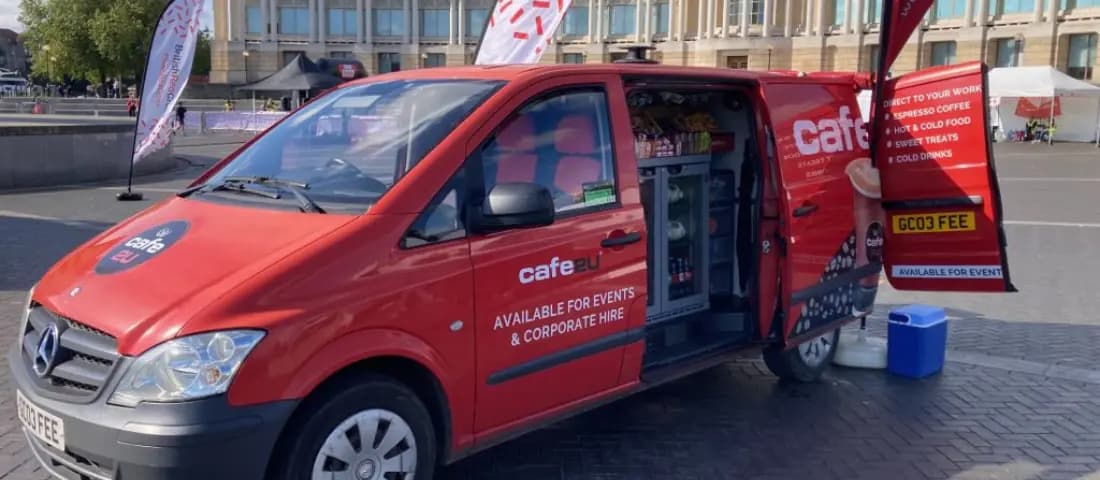
| Van-Based Mobile | Fitted van serving offices, events, and markets | £15,000 to £60,000 | Flexible operators who prefer lower fixed overheads |
| Drive-Through | Purpose-built unit with high vehicle throughput | £250,000 to £700,000+ | Well-capitalised investors targeting suburban retail sites |
The format question matters because it shapes everything: your landlord relationship, your staffing requirements, the hours you work, and how quickly you can grow. A van-based concept like Cafe2U offers flexibility and low overheads but ties your income to weather and the reliability of your regular pitch locations. A full cafe unit offers higher potential volume but commits you to significant fixed costs from your first trading week.

Investment Scale at a Glance
These ranges are a starting point for research, not a definitive cost guide. Always request the full disclosure of estimated initial investment from any franchisor you are seriously considering, and have an independent accountant review the projected trading figures alongside your own assessment of the territory.
What You Are Actually Buying
A coffee franchise is not simply a licence to use a brand name. The strongest offers include supplier arrangements (often at rates an independent operator could not negotiate alone), a proven recipe and equipment specification, training in both coffee preparation and business management, a detailed operations manual, and ongoing support from a field development team. Weaker offers may provide the branding while leaving you to figure out much of the operational detail yourself.
When comparing franchisors, pay close attention to the training programme. Coffee quality is the most visible variable in customer satisfaction, and a franchisor who takes barista training seriously understands the product. Ask about refresher training, how product development updates are rolled out across the network, and what support you can expect in your first three months of trading.
Ask any franchisor whether they are a member of the British Franchise Association. bfa membership requires franchisors to meet an ethical code of practice and to submit to an accreditation process. It is not a guarantee of commercial success, but it signals that the organisation has been scrutinised by an independent body and has committed to transparent franchising standards.
Location: The Variable You Cannot Ignore
Ask any experienced franchisee and they will tell you the same thing: location matters more than almost any other factor. The strongest coffee concept in the world will underperform in the wrong spot. Before committing to a territory or a specific site, carry out your own footfall analysis at different times of day and across different days of the week. Do not rely solely on the franchisor's market assessment, however thorough it appears.
Think carefully about what generates traffic near your proposed location. Office workers create reliable morning peaks but may trail off at weekends. Retail parks generate weekend volume that can compensate. Residential neighbourhoods can support a community-facing cafe but tend to trade on tighter margins and require a sustained local presence to build genuine loyalty. Each profile demands a different operational approach and a different mindset as an owner.

Talking to Existing Franchisees
No amount of prospectus reading replaces a direct conversation with someone already operating under the brand you are considering. A confident franchisor will encourage this and provide a franchisee contact list without hesitation. One who is reluctant to facilitate those introductions is offering you a significant warning signal. When you do speak with existing operators, ask about the reality of the support they receive, whether the brand's central marketing activity has delivered tangible footfall to their location, and what they know now that they wish they had understood before signing. Ask whether they would invest again, and listen carefully to the nuance in how they answer.
Look at established UK brands with active networks, such as Black Sheep Coffee, to understand what a mature proposition looks like in practice, then compare newer entrants against those same criteria before making a decision.
You can browse the full range of coffee franchise opportunities on our directory to compare formats, investment levels and brand approaches side by side.
The Franchise Agreement
The Franchise Agreement is a legally binding document and deserves serious attention before you sign. Key areas to examine include: the length of the initial term and the conditions under which it can be renewed; the territory definition and whether it provides genuine exclusivity or simply a protected area; the circumstances under which the franchisor can terminate the agreement; and your rights to sell or transfer the franchise if you wish to exit. The exit terms in particular are often overlooked by first-time buyers and can prove significant if your circumstances change.
Always engage a solicitor who specialises in franchise law to review the agreement before you commit. The UK Government's guidance on setting up a business provides a useful grounding in the legal structures involved. The cost of professional advice at this stage is modest compared to the financial commitment and the years of your working life you are about to sign up for.
Frequently Asked Questions
Do I need experience in hospitality to run a coffee franchise?
Not necessarily, though relevant experience helps you hit the ground running. Most franchisors provide comprehensive training covering coffee preparation, customer service, and business management. What matters more is a genuine willingness to learn, the ability to manage a small team effectively, and the commercial discipline to run a tight operation day after day. Van-based mobile concepts in particular are accessible to career changers without a hospitality background.
How long does it take to open a coffee franchise in the UK?
From signing the agreement to opening day typically takes between three and twelve months, depending on the format. A mobile van setup can move quickly once the vehicle is fitted and training is complete. A high street cafe unit involves a lease negotiation, a full fit-out, and regulatory approvals (including food hygiene registration) that can extend the timeline considerably. Your franchisor should be able to give you a realistic project plan based on your specific site and territory.
Can I get finance to buy a coffee franchise?
Yes. Several major UK banks have dedicated franchise lending teams and may view a franchise investment more favourably than an unproven independent business, because the track record of an established network provides some evidence of commercial viability. The UK Government Start Up Loans programme may also be an option for eligible candidates. Speak with a financial adviser who has franchise experience before approaching lenders, and never invest capital you cannot afford to commit for the duration of the franchise term.
What ongoing fees will I pay to the franchisor?
Most coffee franchises charge a management services fee (commonly called a royalty) calculated as a percentage of your turnover, plus a contribution to a central marketing fund. Some models also require you to purchase stock or equipment exclusively through the franchisor's supply chain, which forms part of the effective ongoing cost. The full schedule of fees must be disclosed in the franchise prospectus before you invest, and you should model these costs carefully against your projected trading figures.
Is a coffee franchise a good investment?
Whether any franchise is a sound investment depends on the specific brand, your chosen location, your strengths as an operator, and market conditions in your area. No franchise can guarantee a financial return, and anyone suggesting otherwise should be approached with significant caution. The best way to assess potential is to speak with existing franchisees about their real-world experience, have an independent accountant review any projected figures, and take proper legal advice on the agreement. As a directory, we do not operate these businesses: we point you to franchisors' own earnings disclosures and to existing network operators for the clearest and most honest picture.
Browse Coffee Franchise Opportunities
Compare formats, investment levels and brand ethos across the UK coffee franchise sector, all in one place.
See Coffee Franchises